Ethereum Faces a Network Activity Test as Analysts Look Beyond the Upgrade Roadmap
Ethereum’s 2026 roadmap keeps scalability in focus, but analysts argue ETH needs stronger onchain activity before it can regain momentum against Bitcoin and other major assets.

Introduction
Ethereum Faces a Network Activity Test as Analysts Look Beyond the Upgrade Roadmap is one of the most important digital
asset stories for Cryptovir readers because it shows how the crypto market is being shaped by regulation, institutional
demand, infrastructure choices, and user trust. The headline is not only about a single announcement. It is about how a
fast-moving industry is trying to become more mature while still carrying real risks for users, builders, exchanges, and
investors.
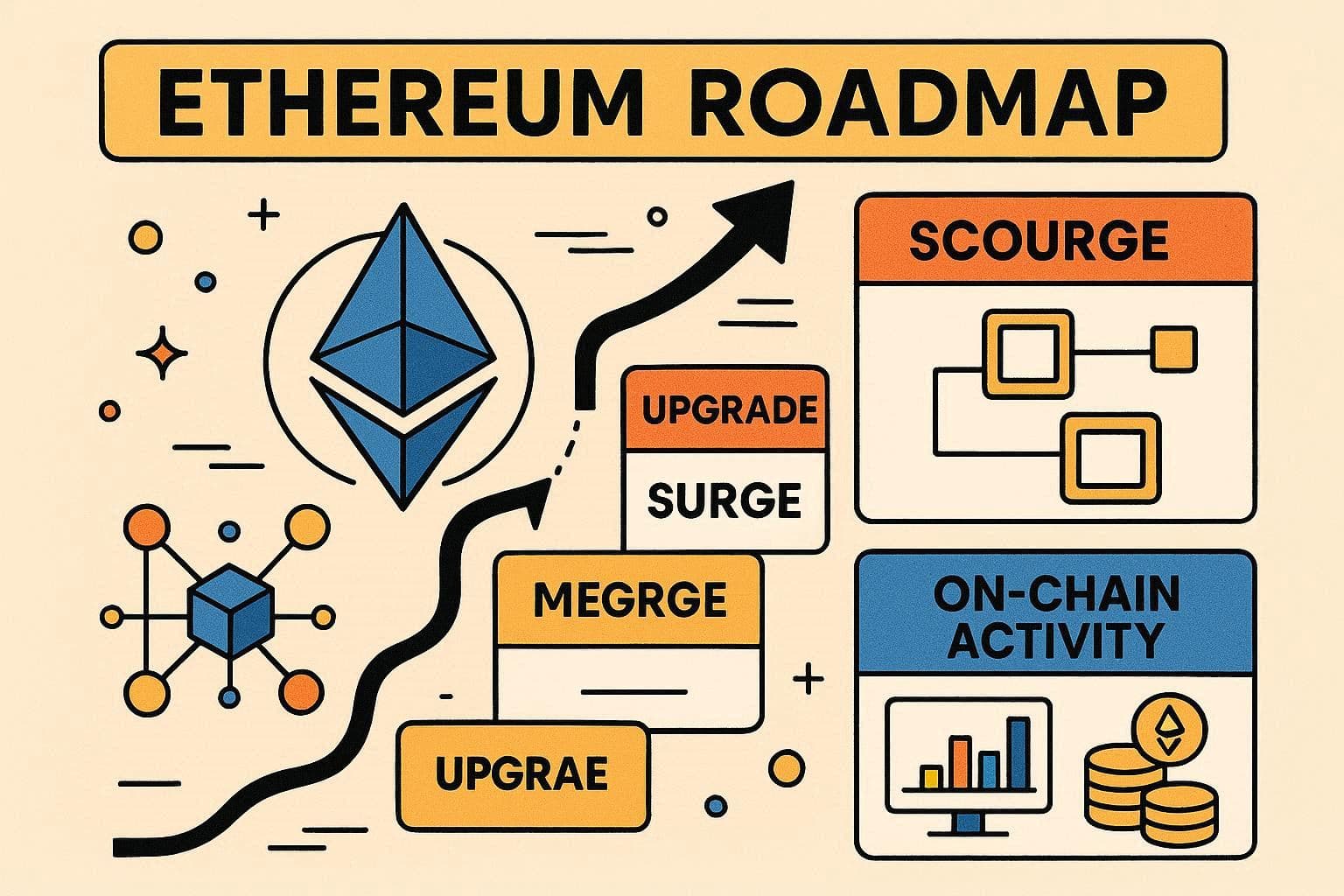
CoinDesk reported that JPMorgan analysts argued Ether and altcoins may struggle to catch up with Bitcoin without a major
network activity boom, even as Ethereum continues preparing upgrades such as Glamsterdam and Hegota. The safest way to
read this story is with balance: the development may be positive for market clarity or adoption, but it does not remove
volatility, technical risk, legal uncertainty, or the need for careful research. Crypto news often moves quickly, and a
headline can be misunderstood when readers focus only on price or hype. This article explains what happened, why it
matters, what risks remain, and what signals readers should watch next.
What Happened
The report pointed to a gap between technical upgrades and actual demand, noting that lower Layer 2 fees do not
automatically create stronger value capture for ETH.
Ethereum’s roadmap includes upgrades designed to improve scalability, execution efficiency, and cost predictability.
Analysts have questioned whether previous upgrades translated into enough onchain activity to support ETH’s market
performance.
Layer 2 networks have made transactions cheaper, but lower mainnet fees can also reduce the token burn mechanism that
previously supported ETH supply dynamics.
The debate is not about whether Ethereum is still important; it is about whether its technical roadmap can create
stronger economic activity at the base layer and across its ecosystem.
Why This Matters
Ethereum remains a major base layer for DeFi, stablecoins, tokenized assets, wallets, and Layer 2 settlement.
A strong roadmap is useful only if developers, users, institutions, and applications continue to generate sustainable
activity.
ETH holders are watching whether scaling improvements help the network grow or simply move activity to cheaper layers
with weaker value capture.
For a serious crypto news site, the important point is not to present every development as bullish or bearish. A
regulatory bill can help responsible companies while also adding compliance costs. An ETF flow report can reveal
institutional behavior while still hiding technical details such as arbitrage and portfolio rebalancing. A stablecoin
announcement can improve payment access while raising questions about reserves and redemption. That is why every story
needs context before readers make conclusions.
Background for New Readers
Ethereum’s long-term strategy has increasingly centered on Layer 2 scaling, where rollups process more transactions
while Ethereum mainnet acts as a settlement and security layer.
This approach can improve user experience, but it also changes how fees, token burn, and network economics flow through
the ecosystem.
The next phase of Ethereum analysis is less about one upgrade date and more about whether the ecosystem can make
consumer apps, financial rails, and infrastructure feel useful at scale.
Many readers enter crypto through a price chart, but the industry is larger than short-term trading. It includes payment
networks, exchange infrastructure, smart contract platforms, custody providers, analytics firms, wallet developers,
lawmakers, central banks, and public companies. A single headline can touch several of these areas at once.
Understanding the background helps readers avoid the common mistake of treating crypto as one simple market. Bitcoin,
Ethereum, stablecoins, tokenized deposits, ETFs, sanctions compliance, and national regulation all follow different
logic.
Market Impact
The market impact of this story depends on how investors and companies interpret the next steps. Some developments
affect prices directly because they influence liquidity, fund flows, or risk appetite. Others affect the market more
slowly by shaping compliance, product design, institutional access, or user confidence. For example, an ETF outflow
streak may matter quickly because it changes the visible demand channel for Bitcoin. A regulatory framework may matter
more gradually because companies need time to interpret rules, change products, and apply for licenses.
Readers should be careful with simple narratives. A negative headline does not always mean long-term adoption is
failing, and a positive headline does not guarantee price growth. Markets often react first and understand later. In
crypto, that effect can be stronger because leverage, social media narratives, thin liquidity during stress, and global
trading hours can exaggerate moves. A balanced article should separate the event itself from the market’s emotional
response to the event.
Another important factor is correlation. Crypto assets can move with technology stocks, liquidity expectations, U.S.
dollar conditions, ETF flows, regulatory headlines, and geopolitical stress. This means a crypto-specific development
may be only one part of the price story. A strong regulatory proposal might arrive during weak macro conditions, or a
promising product launch might happen while investors are reducing risk. Readers should look at both the headline and
the wider market environment.
What It Means for Users
For everyday users, the main lesson is to focus on practical effects. Does the development make a platform safer? Does
it improve transparency? Does it make an asset easier to access? Does it create new risks around custody, liquidity,
fees, or legal status? Users should not assume that a product is safe only because it is popular, listed by a large
platform, or mentioned by a government or major company. Crypto products can still fail, be hacked, become illiquid, or
face regulatory restrictions.
Users should also pay attention to jurisdiction. A service that is available in one country may be restricted in
another. A token that is treated one way by one regulator may be viewed differently elsewhere. Stablecoins, ETFs,
staking products, exchange services, and tokenized assets can all have different legal treatment. Before using a
product, readers should check official disclosures, terms of service, supported countries, risk warnings, and custody
arrangements.
Security remains essential. Even strong regulation cannot protect users from seed phrase theft, phishing links, fake
exchange apps, social media impersonators, malicious smart contracts, or unrealistic profit promises. The safest
approach is to use trusted links, enable strong account security, avoid sharing recovery phrases, test small
transactions, and treat unsolicited offers with suspicion. Good crypto education must always combine market awareness
with basic personal security.
What It Means for Builders and Companies
For builders and companies, this story is a reminder that the next phase of crypto is not only about launching fast. It
is about building products that can survive compliance review, user scrutiny, infrastructure stress, and market
downturns. Exchanges need clearer listing standards and custody practices. Wallet teams need safer user flows.
Stablecoin issuers need transparent reserves and redemption systems. Protocol teams need documentation, audits, and
realistic risk communication.
Companies that treat regulation as an afterthought may find it harder to scale. At the same time, companies that
understand legal requirements too slowly may lose momentum to competitors. The challenge is to build products that are
useful, understandable, secure, and flexible enough to adapt when rules change. In a maturing crypto industry,
operational discipline can become just as important as technical innovation.
This does not mean innovation must stop. It means serious teams need to explain how their systems work. Users and
partners will increasingly ask who holds assets, how reserves are managed, what happens during outages, how disputes are
handled, how sanctions screening works, and what rights users have. The projects that answer these questions clearly may
earn more trust than projects that rely only on token incentives or social media attention.
Key Risks and Unknowns
- Network upgrades may not create immediate user growth
- Layer 2 fragmentation can confuse users
- Lower fees can reduce ETH burn
- Competing chains may attract faster retail growth
These risks do not mean the development is unimportant. They mean readers should avoid treating the news as a final
answer. Crypto markets are full of unfinished transitions. A bill can still be amended. A product can launch with
limited adoption. A token can attract attention but struggle with liquidity. A regulatory action can shift behavior
without solving every illicit finance problem. A price move can look decisive and then reverse when new data appears.
The unknowns are especially important because they determine whether the story becomes a durable trend or a short-lived
headline. Reserve details, legal definitions, enforcement priorities, product adoption, user behavior, macro conditions,
and technical execution can all change the outcome. Cryptovir readers should watch for follow-up documents, official
statements, onchain data, exchange announcements, and independent analysis rather than relying on one initial report.
What Readers Should Watch Next
- Activity on major Ethereum Layer 2 networks
- Base-layer fee revenue and ETH burn trends
- Stablecoin and DeFi volume on Ethereum infrastructure
- Adoption of upcoming Ethereum upgrades
- Institutional demand for ETH exposure and staking products
A good way to follow this story is to separate confirmed facts from interpretation. Confirmed facts include official
announcements, filed documents, public statements, reported flow data, and onchain activity. Interpretation includes
market predictions, price targets, social media reactions, and claims about what the event will mean in the future. Both
can be useful, but they should not be treated as the same thing.
Readers should also compare multiple signals. For market stories, watch price, volume, ETF flows, derivatives
positioning, liquidity, and macro conditions. For regulation stories, watch final legal text, agency guidance,
enforcement activity, and industry response. For infrastructure stories, watch developer adoption, user growth, fees,
security incidents, and real transaction activity. A single metric can be misleading, but a group of metrics can reveal
whether a trend is becoming stronger or weaker.
Cryptovir Takeaway
The main takeaway is that crypto is becoming more connected to traditional finance, government policy, and real-world
payment infrastructure. That connection can bring legitimacy, liquidity, and clearer rules, but it can also bring
stricter oversight, political friction, and new forms of systemic risk. The healthiest interpretation is neither blind
optimism nor automatic rejection. Readers should ask what problem the development solves, who benefits, who carries
risk, and what details remain unclear.
For the ethereum category, this article should be read as part of a wider pattern. The crypto industry is no longer
moving only through token launches and exchange listings. It is moving through legislation, ETF structures, stablecoin
rules, institutional products, infrastructure upgrades, sanctions enforcement, and payment experiments. That is why
careful reporting matters. A well-informed reader is less likely to chase hype and more likely to understand the real
direction of the market.
Conclusion
Ethereum Faces a Network Activity Test as Analysts Look Beyond the Upgrade Roadmap is a meaningful development, but it
should not be treated as a guarantee of profit, safety, or permanent adoption. The story matters because it reveals how
crypto is changing: more regulated, more institutional, more integrated with traditional finance, and more closely
watched by governments and users. At the same time, the industry remains volatile and technically complex.
Cryptovir will continue to follow developments like this with a focus on clarity, responsible context, and practical
reader education. The goal is not to push hype, but to help readers understand what happened, why it matters, what risks
remain, and what signals deserve attention next.
Disclaimer: This article is for informational and educational purposes only. It is not financial, investment, trading, legal, or tax advice.
Additional Reader Context
Crypto coverage can become confusing because the same word can mean different things in different settings. A token can
be a payment instrument in one product, collateral in another product, a governance tool in a protocol, and a regulatory
question in a legal filing. That is why readers should look at function, rights, issuer, custody, disclosures, and
market behavior before deciding what a development really means.
Another useful habit is to distinguish infrastructure from speculation. Infrastructure includes payment rails, custody,
wallets, exchanges, validator networks, analytics tools, and regulatory reporting systems. Speculation includes short-
term price movement, leverage, social media excitement, and narrative rotation. Healthy markets need infrastructure, but
speculation often receives more attention because it moves faster and creates stronger emotions.
For long-term readers, the most valuable stories are often the ones that explain how incentives are changing. If
regulation becomes clearer, companies may invest more in compliance. If ETF flows weaken, institutions may reduce
exposure or shift strategies. If stablecoins become more regulated, payment companies may compete differently. If
Ethereum activity changes, developers may adjust where they build. Incentives shape behavior, and behavior shapes the
market.

Written by
Alif Fahmi
hi , I'm Alif, I'm a blockchain & cryptocurrency lover, I love writing & learning, my job is web developer & crypto trader